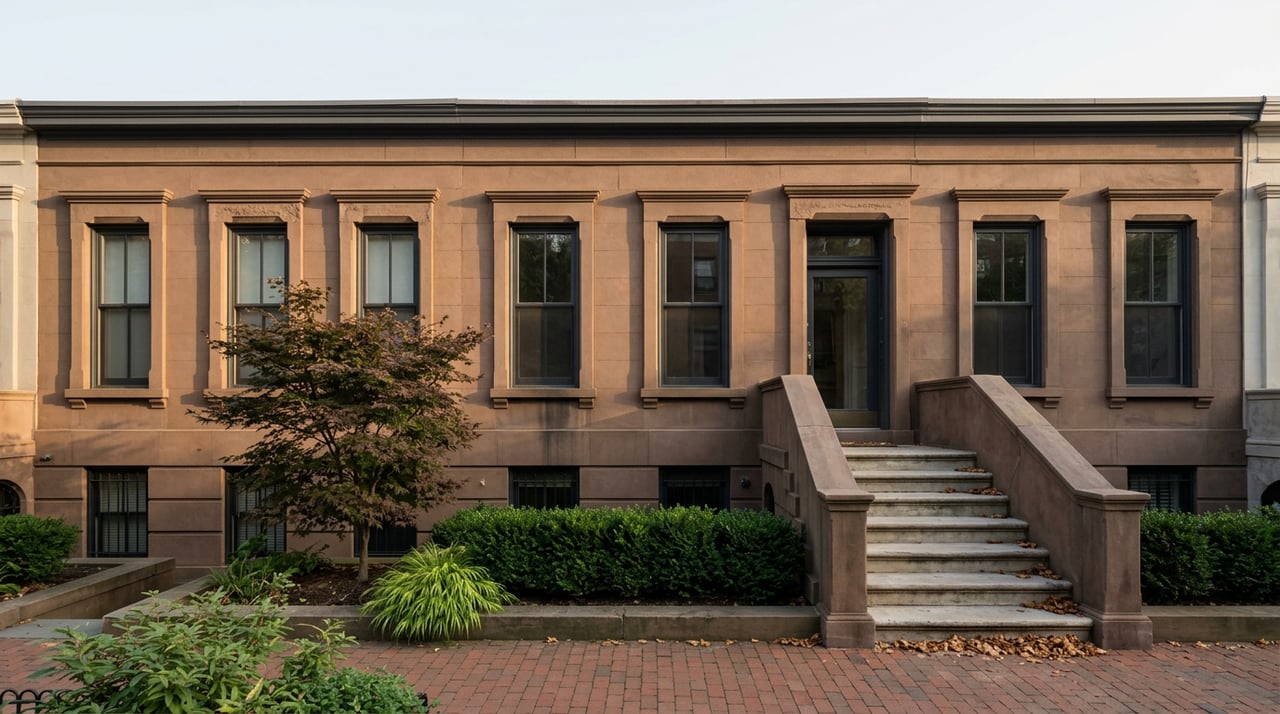
Picture two buyers touring nearly identical two-bedrooms in the same week. One is in a new Paulus Hook tower, monthly taxes quoted at a few hundred dollars. The other sits in a prewar building in the Heights, monthly taxes running four times that figure. Most buyers walk out of the Paulus Hook showing thinking they found the deal and walk out of the Heights showing thinking they found the burden.
A low PILOT payment can make a condo's monthly costs look especially appealing. In Jersey City this year, buyers may also want to consider how that payment could change over time.
What that tax line on the listing actually is
A low monthly tax figure on a newer Jersey City condo usually isn't a tax bill at all. It's a Payment in Lieu of Taxes, a financial agreement between the building's developer and the city that replaces conventional property taxation for a set term, sometimes ten years, sometimes thirty, as Better Blocks explains. A separate, shorter tool called a tax exemption caps out at five years and is more common for individual condo renovations. The city currently has more than 100 of these long-term agreements in effect, a scale that has made them one of the most argued-over line items in Jersey City's municipal finances.
The distinction matters because of what happens at the end. Under N.J.S.A. 40A:20-12, when a PILOT expires, the unit rolls onto the conventional tax roll, and the school portion of the bill, which had been effectively absent, arrives in full for the first time. Better Blocks explains that, under state law, a municipality keeps 95 percent of long-term PILOT revenue and the county gets 5 percent. The Board of Education gets nothing directly from a PILOT payment. That's not a technicality. It's the reason the jump at expiration tends to be dramatic rather than gradual.
What changed in 2026
The price of an abated Jersey City condo was never really set by this year's PILOT payment. It's set by the distance between that payment and the fully taxed bill the unit will eventually owe, discounted for however many years remain on the agreement. In 2026, two developments changed the tax context buyers may want to consider.
The first was compliance scrutiny. On January 21, 2026, the City of Jersey City reported that Mayor James Solomon signed an executive order launching a comprehensive audit of every long-term tax exemption active in the city. Skoloff & Wolfe reported that the audit had a stated goal of reviewing all of them for compliance by July 1. The city inherited a structural deficit of roughly $254.8 million, and PILOT agreements sit among its largest revenue levers.
The second was the tax rate itself. Solomon's team floated a 20 percent municipal property tax increase in June, then walked it back after securing state assistance. The council introduced a 15.5 percent figure in mid-July, and on August 26, 2026, adopted a final municipal rate increase of 15.15 percent as part of an $886.4 million budget.
The market price of an abated Jersey City condo was never set by the PILOT payment on the listing sheet. It's set by the gap between that payment and what the unit owes once the agreement runs out
What this looks like when you run the numbers
A jump of roughly $800 a month is a commonly cited outcome when a PILOT or exemption expires and a unit rejoins the conventional roll. On a thirty-year hold, that increase compounds against every future rate adjustment from that point forward, not just the one increase you can see today.
Before writing an offer on an abated unit, a few questions belong in the file rather than left to assumption:
- What does the recorded financial agreement actually say about the term, the start date, and any escalator schedule, rather than relying on the monthly figure quoted in the listing?
- What would this unit owe at today's fully taxed rate, calculated by the assessor rather than projected off a pre-2026 estimate?
- Is the building's agreement currently part of the mayor's compliance audit, and if so, is it in good standing or under review?
- How does your specific lender underwrite the payment? Some lenders qualify borrowers on the current abated figure. Others underwrite the projected post-abatement number, which changes the debt-to-income math and can move a pre-approval up or down before you ever get to the table.
Attorneys handling Jersey City condo purchases increasingly pull the recorded financial agreement during attorney review rather than taking the marketing figure at face value. That comparison can help buyers spot discrepancies before they become a point of negotiation.
Why the Heights conversation is different, not worse
| Downtown / Paulus Hook | The Heights | |
|---|---|---|
| Typical tax structure | New construction, often on a long-term PILOT | Established housing, largely full conventional rate |
| Price range you'll commonly see | Roughly $800,000 to $2 million-plus | Wider range, more two- and three-family stock |
| What the listing shows | The current PILOT payment | The current number is knowable today |
| What moves | The bill at expiration, and audit outcomes in the meantime | The municipal rate itself, now up 15.15 percent |
| The conversation you need | A cliff analysis: what happens when the agreement ends | A trajectory analysis: what a rate that's already risen once does next |
Neither column is the safe one and neither is the trap. They're two different kinds of uncertainty, and a buyer who treats them as the same conversation is the one who ends up surprised.
It helps to remember that Jersey City's standard tax rate, before any abatement enters the picture, is genuinely competitive within the region. At 1.67 percent, it runs well below Newark's 2.8 percent, Montclair's 3.2 percent, and Maplewood's 3.4 percent. A Heights property paying the full rate is below those regional comparison rates. An abated Downtown unit has a different cost profile because its payment may change when the agreement ends.
The point isn't to avoid abated units
None of this argues against buying into a PILOT building. Downtown towers on long-term agreements remain some of the best-marketed inventory in Hudson County. A shorter remaining term isn't automatically a worse buy either. It narrows the resale pool to buyers who can absorb the post-expiration payment, and if the asking price already reflects that rollover, the math can still work in your favor.
The point is that a buyer who runs the sequence, pulling the actual agreement, checking audit status, confirming lender treatment, prices the unit correctly. A buyer who skips it is pricing in a payment shock they never saw coming.
A few questions buyers keep asking
Does a shorter remaining PILOT term always mean a worse deal? Not necessarily. It means the pool of future buyers narrows to those who can absorb the post-expiration bill, which is a pricing question rather than a disqualifying one.
What is Mayor Solomon's audit checking? The audit is aimed at compliance with the terms of the financial agreement itself. Whether a specific building is in good standing is exactly the kind of question worth confirming before you're under contract.
Is the 15.15 percent increase a one-time adjustment? It closes this year's gap. Whether next year looks similar depends on decisions the city hasn't made yet, which is one more reason the fixed payment on an abated unit can look appealing today while still carrying its own long-term question mark.
If you're comparing an abated Downtown listing against a fully taxed property in the Heights, or anywhere else in Hudson County, the numbers on the listing sheet only tell you what this year costs. Staci Manoukian can walk you through the recorded agreement, the audit status, and what the payment actually looks like the year the PILOT runs out, before you write the offer instead of after.
This article is general information, not legal, tax or financial advice. Consult a qualified professional about your situation.