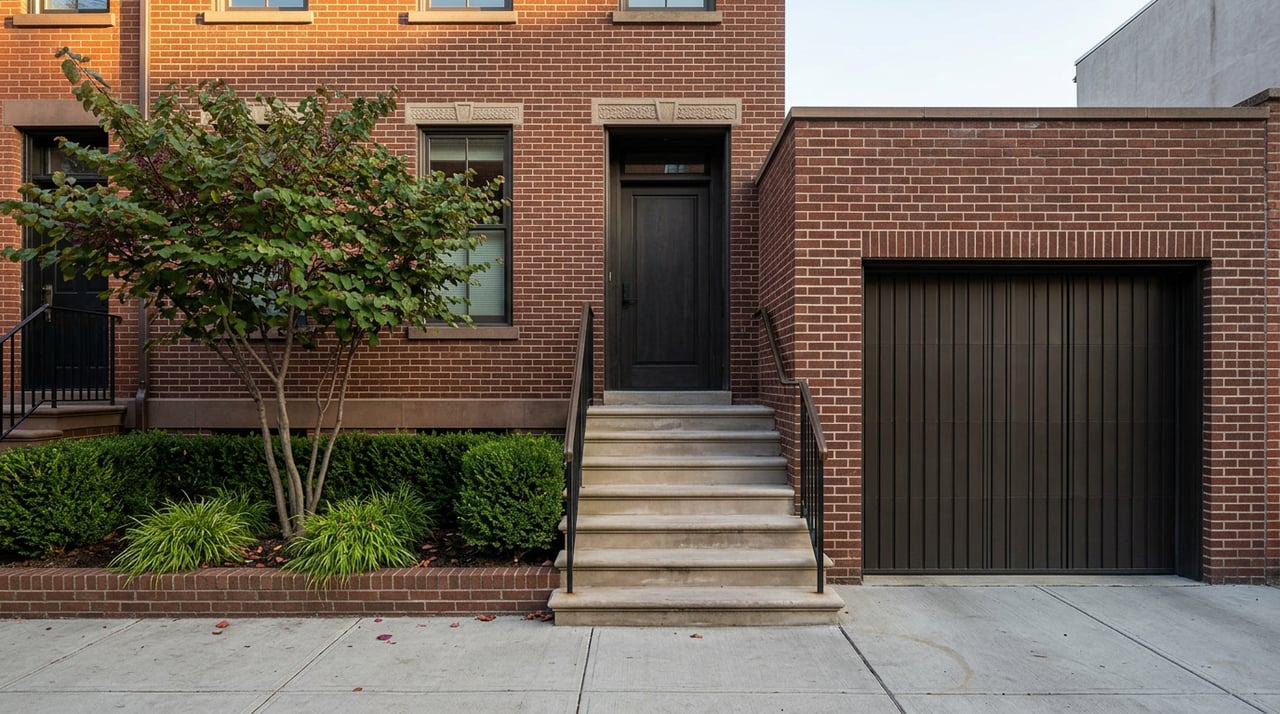
A buyer under contract on a two-bedroom near the Garden Street corridor asks her attorney a simple question during review: the listing said "parking," so does that mean the unit comes with a spot? The answer, more often than she expects, is no. It might mean a deeded space. It might mean the building has an arrangement with a private garage. Or it might mean nothing more than the seller currently holds a resident permit.
Those three things are not interchangeable, and the gap between them is exactly where Hoboken buyers get surprised after closing.
Three Different Products, One Word
Start with what a resident permit actually buys. As of June 1, 2026, the Hoboken Parking Utility charges $95 for a first vehicle, $200 for a second, and $300 for a third. That permit exempts you from the four-hour meter limit after 9 a.m.
A monthly garage contract is a different product entirely. Rates across Hoboken run roughly $175 to $450 a month depending on the operator, the neighborhood, and whether the space is covered or open-air. Specific facilities post their own posted rates, among them the Park & Garden Lot 26 Garage on Garden Street starting around $175, the Lot 32 Garage on Harrison Street, the 800 Madison Street Garage, and the 72 Park Avenue Garage on Willow Avenue. Private operators including SP+ and LAZ Parking run additional locations near the waterfront along Sinatra Drive and along the Observer Highway corridor. Unlike a permit, a garage contract comes with a monthly bill.
The third option is a deeded parking space. That space typically adds somewhere between $25,000 and $75,000 to the purchase price, folded into the mortgage rather than paid monthly.
Resident Permit Rates and Oversubscription
A resident permit is less expensive than a garage contract or a deeded space. When the City Council took up an ordinance earlier this year to raise permit fees, Hudson County View reported that the text of that ordinance stated that residential parking permits were oversubscribed, with roughly 20 percent of Hoboken streets having more than three permits issued per available parking space. That figure compares permits issued with available spaces.
The new rates are $95, $200, and $300. A household pays under a hundred dollars a year for a first-vehicle permit.
Here is the rate change in full:
| Vehicle in household | Rate before June 2026 | Rate starting June 1, 2026 |
|---|---|---|
| First vehicle | $52 | $95 |
| Second vehicle | $104 | $200 |
| Third vehicle | $208 | $300 |
Even at the new, higher rates, a permit remains the least expensive of the three options by a wide margin.
The Math That Actually Matters at Closing
For a buyer comparing two similar units, one with a deeded space and one without, the honest comparison is not the sale price alone. It is the sale price plus whatever parking will cost over your expected time in the home. A unit priced $30,000 lower but reliant on a monthly garage contract at $300 can close that gap within roughly eight years of ownership, before accounting for the fact that garage rates tend to rise while a deeded space's cost is fixed at purchase.
For someone planning to stay five years or longer, a deeded space usually pencils out in the buyer's favor, both in carrying cost and in resale, since a unit with dedicated parking draws a wider pool of buyers when it is your turn to sell. For a shorter hold, or for a buyer confident they can live without a car, the math shifts the other direction. Hoboken's own car-share program, Corner Cars, exists in part because enough residents have decided that owning a car here costs more in hassle than it is worth, and going without one is a legitimate financial choice, not a compromise.
None of that math works, though, if you do not know which of the three products a listing is actually offering. That is the question worth asking before you write an offer, not after attorney review.
What to Ask Before You Assume
Three questions cover almost every version of this problem:
- Is the parking a deeded space, or an arrangement the current owner has with a private garage?
- If there is no deeded space, does the building have any relationship with a nearby garage, or would a new owner need to secure their own contract with an operator like SP+ or LAZ Parking?
- If the plan is street parking, has the seller actually used a resident permit successfully in that specific zone, or is the listing simply noting that permit parking exists somewhere in Hoboken?
Ask the seller's agent to answer all three plainly. If the answer to the first question is vague, ask for clarification before making an offer.
A Few Questions Buyers Ask
What if a building has no deeded spots and no garage relationship at all? That is common, especially in Hoboken's brownstones, which typically have no garage access built in. In that case, a new owner is choosing between a monthly garage contract and street parking, and should price that choice into their monthly budget the same way they would price in a homeowners association fee.
Are municipal garages an option instead of a private operator? Yes. The city operates four municipal garages and two surface lots, including Garage D at 215 Hudson Street, with monthly standard, monthly limited, and monthly reserved options at posted rates. They are worth comparing against private operators before signing a contract.
The Line Worth Reading Twice
A listing that simply says "parking" may refer to three different arrangements. Ask which one applies before you make an offer.
If you are comparing two Hoboken buildings and want a straight answer on what their parking situations actually mean for your budget and your resale value down the road, reach out to Staci Manoukian. Two decades of walking these blocks means knowing which buildings come with a deeded space and which leave buyers to arrange for a garage contract or apply for a resident permit.
This article is general information, not legal, tax or financial advice. Consult a qualified professional about your situation.